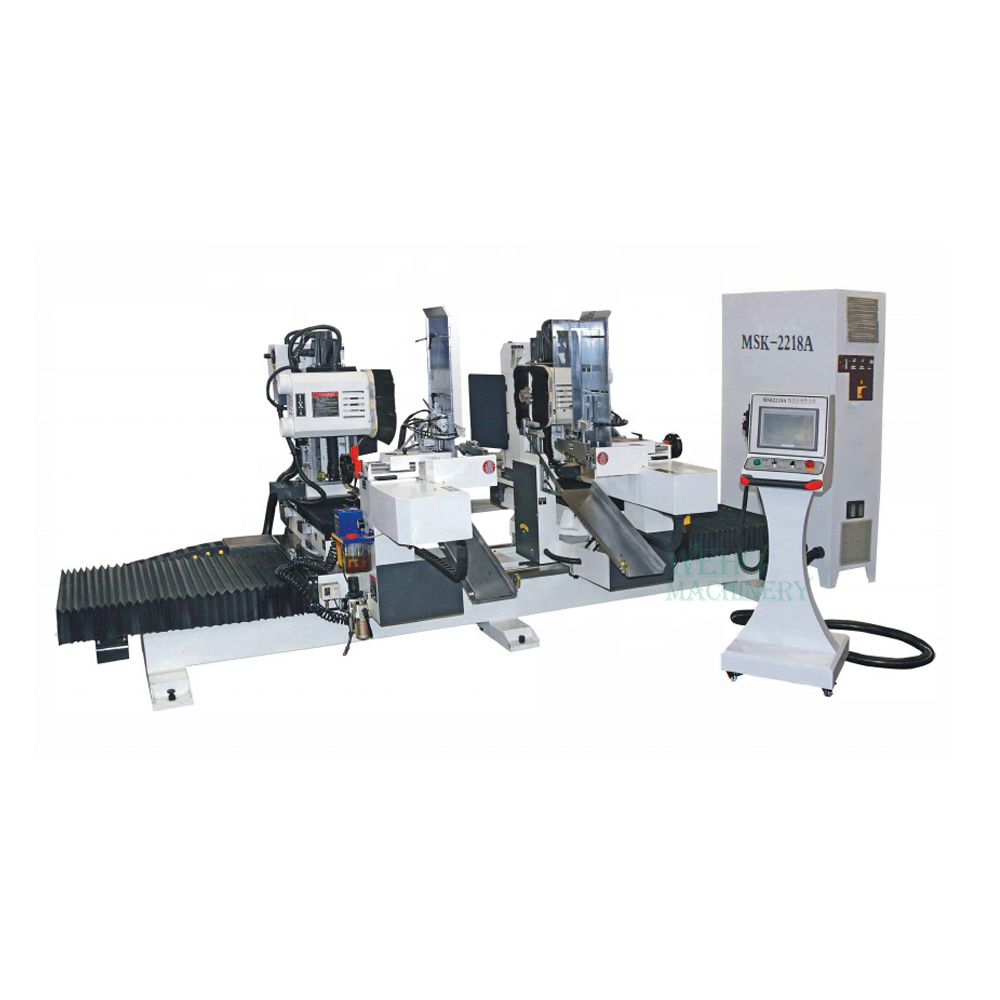
How CNC Tenoners Enhance Automation in Smart Woodworking Factories
In the era of Industry 4.0 and the rapid digital transformation of manufacturing, woodworking factories are shifting from manual and semi-automatic production to fully automated, data-driven workflows. Among the most impactful technologies in this transition are CNC tenoners—advanced machines engineered for precise, efficient, and repeatable tenoning operations. From furniture manufacturing to door production and customized wood component processing, CNC tenoners play a central role in modern automation-focused factories.
This article explores how CNC tenoners enhance automation, boost overall efficiency, reduce labor dependency, and support smart factory development—while also explaining why selecting a reliable manufacturer such as WEHO can greatly enhance your production performance.
What Makes CNC Tenoners Essential for Smart Woodworking Factories?
A CNC tenoner is a computer-numerically controlled machine designed to cut accurate tenons on wooden workpieces. Traditional tenon machines rely heavily on operator skill, manual calibration, and repeated adjustments. In contrast, CNC technology brings precision, consistency, digital control, and automation, all of which are fundamental elements of a smart factory.
Key advantages that support automation:
- High accuracy and repeatability even across long production runs
- Programmable machining parameters for seamless switching between product types
- Integration with MES/ERP systems for data synchronization
- Reduced manual labor and operator error
- Faster production speed with multi-axis working and automated feeding options
- Consistency in joint quality, which ensures stronger and more reliable assemblies
By eliminating inconsistencies and streamlining processing, CNC tenoners form the foundation for robotic arms, automated conveyors, and fully integrated production lines commonly found in intelligent woodworking factories.
Automation and Digital Control: The Core of CNC Tenoners
In a smart woodworking environment, machines must communicate, adapt, and execute tasks with minimal human involvement. CNC tenoners meet these requirements through several automation-enabling capabilities.
Servo-controlled axes for ultra-precise positioning
Servo motors and CNC control systems ensure that all axes move accurately within microns. This improves dimensional accuracy and supports high-precision mortise-and-tenon joints, crucial for furniture frames, door panels, cabinets, and solid wood structures.
Programmable parameters for multi-product flexibility
Modern CNC tenoners offer digital presets for:
- Tenon length
- Tenon thickness
- Cutting angles
- Tool paths
- Feed speed
- Depth of cut
- Number of passes
This allows quick changeovers between product models—an essential requirement for mass customization and smaller batch sizes.
Automated feeding and clamping systems
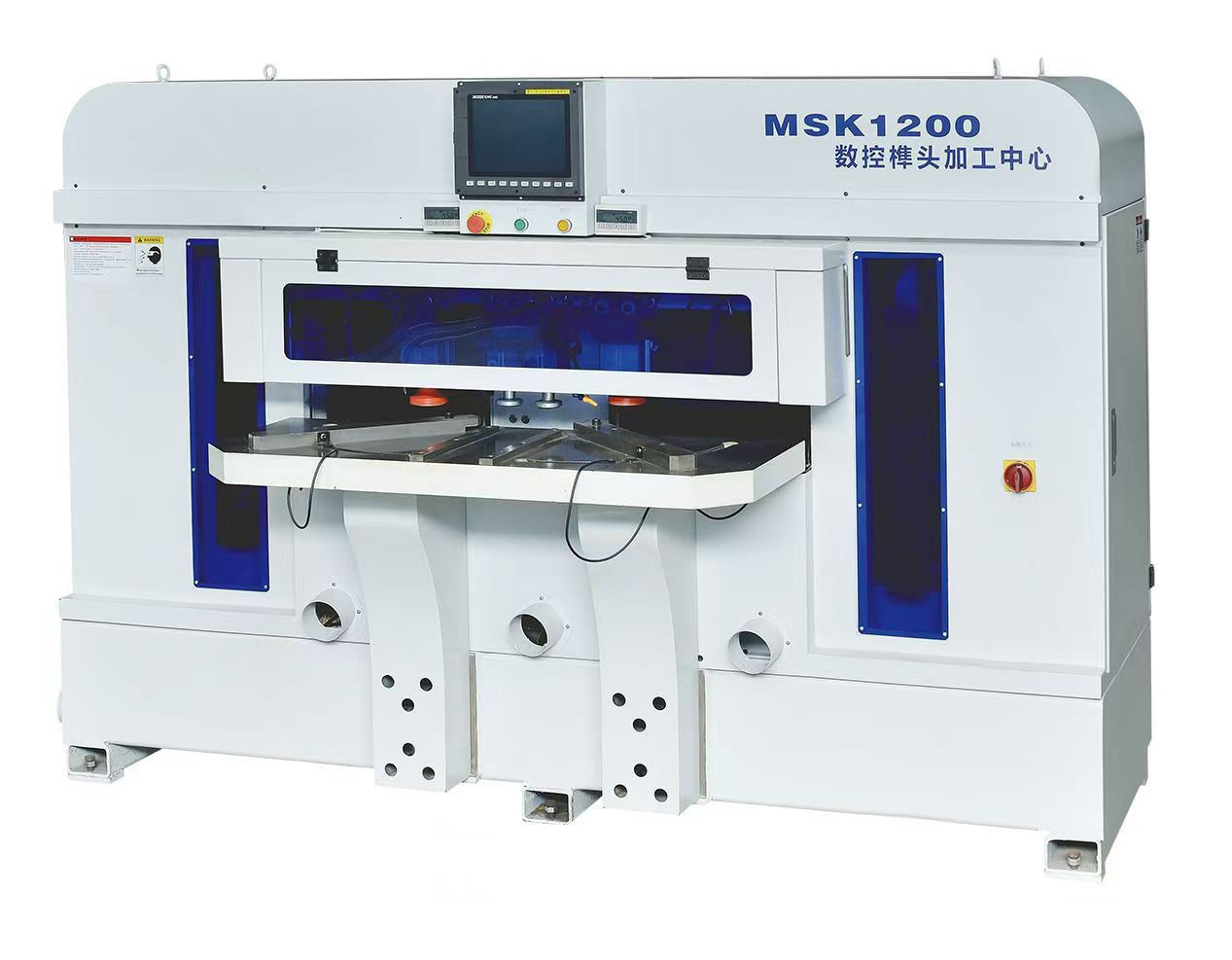
Many CNC tenoners integrate:
- Automatic feeding tables
- Pneumatic or hydraulic clamps
- Conveyor belts
- Robotic loading arms
With these features, a single operator can oversee multiple machines, significantly cutting labor cost while increasing overall output.
Real-time monitoring and production data capture
When connected to factory networks, CNC tenoners can:
- Upload machine status
- Record tool wear
- Track cycle times
- Diagnose issues
- Alert operators automatically
These capabilities keep the production line transparent and enable predictive maintenance—another important aspect of modern Industry 4.0 factories.
Improving Production Efficiency with CNC Tenoners
Efficiency is one of the primary reasons woodworking factories adopt CNC tenoners. Smart factories depend on a continuous, high-performance workflow, and CNC systems greatly support this objective.
Key efficiency-enhancing benefits:
Faster processing speeds
CNC tenoners can complete multiple cuts in a single pass and operate at consistent speeds, reducing cycle times per piece.
Multi-function integration
Some CNC tenoners combine:
- Cutting
- Shaping
- Profiling
- End trimming
- Slot milling
This multi-tasking ability minimizes material handling and reduces the number of machines required.
Reduced rework and scrap
Because CNC systems maintain perfect repeatability, error-prone manual adjustments are eliminated. This results in cleaner joints and less wasted material.
Consistent quality for large-scale production
For manufacturers producing furniture sets, doors, tables, chairs, flooring components, or decorative frames, consistent tenon quality is critical. CNC systems ensure every piece meets specifications, ensuring stable assembly and long-term product durability.
Enhancing Safety and Reducing Labor Dependency
Automation isn't only about speed and accuracy—it also makes the workplace safer and less reliant on skilled manual labor.
Higher safety standards
CNC tenoners come with enclosed cutting areas, emergency stop systems, sensors, and protective covers that minimize the risk of injury. This is especially important because traditional tenoning machines expose operators to moving cutters and dust.
Reduced reliance on skilled operators
Because the CNC control system manages calibration, tool paths, and depth adjustments, factories no longer need highly experienced technicians to achieve consistent results. This solves a major pain point for many woodworking companies facing labor shortages.
One-operator multi-machine management
In a fully automated woodworking line, a single operator can manage several CNC tenoners, dramatically lowering labor costs and improving output per person.
Integration of CNC Tenoners in Smart Woodworking Lines
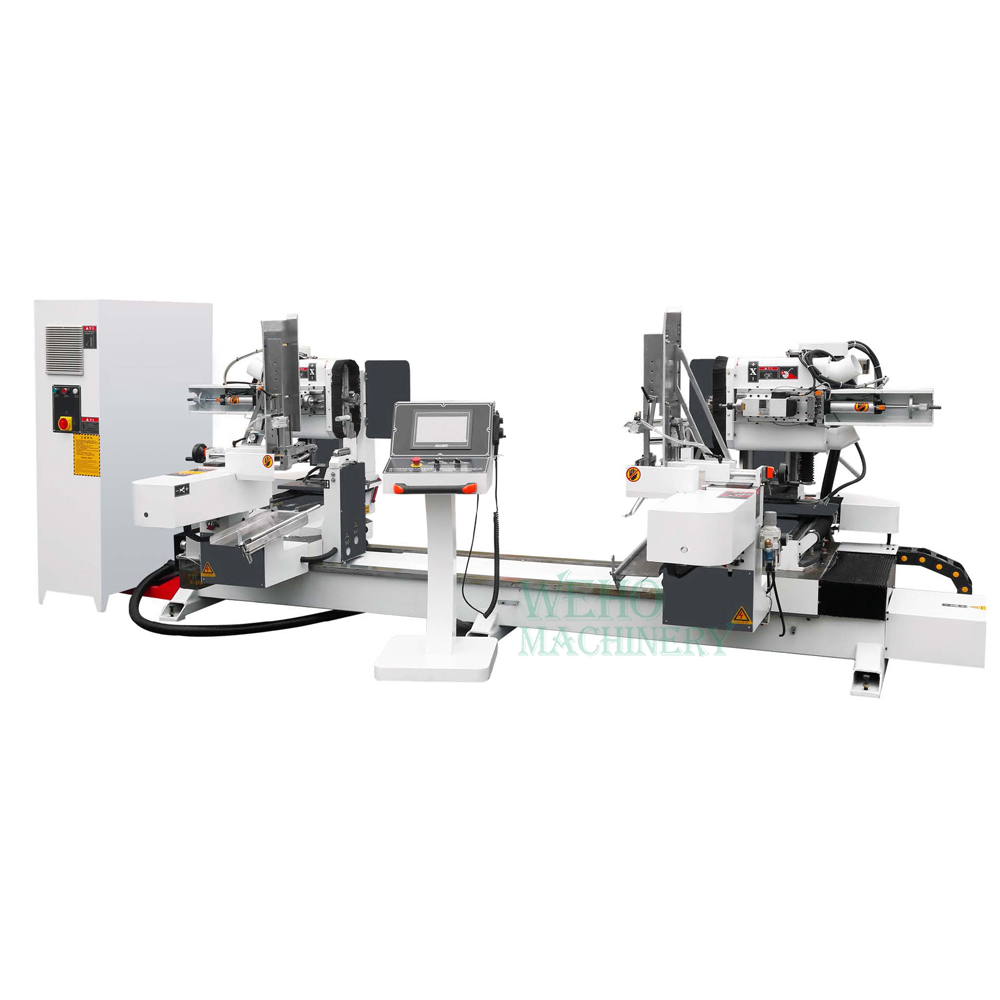
Modern CNC tenoners can be integrated into various automation workflows, including:
Robotic arm feeding for continuous production
Robots can load and unload wood pieces, enabling 24/7 unmanned operation.
CNC machining centers for shaping + tenoning combinations
CNC tenoners work alongside CNC routers, edge banders, and sanding machines to form a seamless digital production chain.
MES and intelligent scheduling systems
Systems can automatically assign tasks, optimize loading, and monitor performance.
Automated conveyor systems
Wood pieces are transferred automatically between cutting, tenoning, assembly, and finishing stations.
These integrations help woodworking factories transition toward smart manufacturing, achieving higher efficiency and competitive production costs.
Why WEHO CNC Tenoners Are Ideal for Smart Woodworking Factories
As automation becomes more critical to woodworking production, choosing a reliable machine supplier is essential. WEHO, a leading manufacturer of woodworking machinery, provides a range of CNC tenoners designed specifically for precision, efficiency, and integration into automated production lines.
Why WEHO stands out:
Advanced CNC control systems
WEHO machines use reliable CNC platforms with stable servo drives that enhance speed and accuracy.
Strong structural rigidity for long-term stability
A heavy-duty frame and precision-engineered components ensure consistent performance even under continuous operation.
Compatibility with smart factory systems
WEHO CNC tenoners can integrate with robotic arms, conveyors, and MES/ERP systems.
Reduced maintenance and long machine life
Efficient lubrication systems, durable spindles, and high-quality components support long-term reliability.
Customizable automation solutions
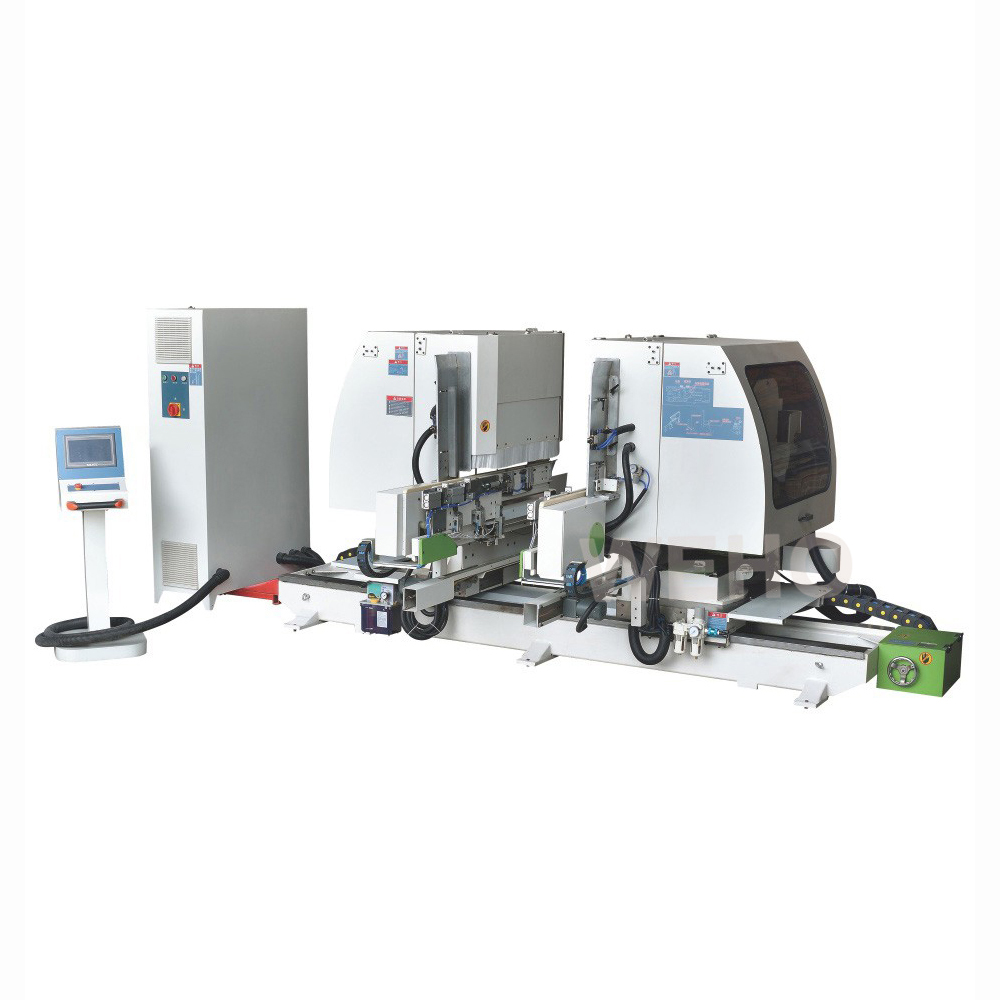
WEHO provides automated feeding, multi-station tenoning, double-end tenoners, and complete production line configurations based on your factory's needs.
For woodworking manufacturers seeking to upgrade capacity, improve accuracy, and transition into smart production, WEHO's CNC tenoner solutions offer a dependable and future-ready choice.
The Future of Woodworking Automation and the Role of CNC Tenoners
The woodworking industry continues to evolve toward intelligent, connected, and flexible manufacturing. CNC tenoners, as essential joinery machines, will remain central to this transformation by providing:
- Unmatched precision for joint processing
- Seamless integration with digital manufacturing networks
- Reduced human intervention
- Better production consistency
- End-to-end automation compatibility
Factories embracing automated CNC technologies like WEHO's tenoners are already achieving lower operating costs, higher throughput, and superior product quality—key elements needed to remain competitive in a global manufacturing landscape.
Conclusion
CNC tenoners are more than just woodworking machines—they are foundational tools that enable woodworking factories to become smarter, more efficient, and highly automated. By integrating digital control, robotic feeding, real-time monitoring, and MES connectivity, CNC tenoners significantly improve productivity and reduce labor dependency.
For manufacturers looking to upgrade their facilities or build a fully automated production line, choosing a reliable supplier such as WEHO ensures long-term stability, consistent performance, and a smoother transition into the era of smart woodworking factories.